As we face into our extinction by AI, it’s worth remembering that, like most systems, it has been designed by fallible, biased humans and is therefore likely to be as flawed at this as we are. AI loves data, and the averages that drive our decision-making in marketing, just as much as we do. We have all seen the live dashboards with Click Through Rates (CTR) up and Cost Per Lead (CPL) down, and we are all reassured that the averages we measure are pointed in the right direction.
Until we get to the client meeting and they ask us why sales are flat. While we are celebrating success, they are questioning our value. We can, and often do, argue that these were the agreed metrics, that this is what success looks like, but the truth is that while optimisation looks productive, we are often perfecting the wrong things. The industry’s rush towards short-term metrics and the live optimisation that follows has turned efficiency into a replacement for originality, not because it drives growth, but because it feels measurable and safe. Safe to present, safe to defend, safe to repeat. Every time we A/B test two weak headlines or pieces of copy, we’re simply optimising bad ideas faster. But efficiency isn’t the enemy here… mediocrity is.
We built a machine that optimises bad ideas
I was talking about the algorithm as long ago as 2008, blaming it for the poor performance of a paid search campaign. Then it was an excuse, today it’s a fact. The introduction of AI has only exacerbated a system that constantly needs feeding, whether with data or with endless creative versions. The idea that the algorithm gods are in charge has infected our industry. Platforms became fabulously wealthy by selling engagement. Whether the majority of impressions are unseen or last less than two seconds doesn’t matter; “the algorithm made me do it” has become an acceptable response to any problem.
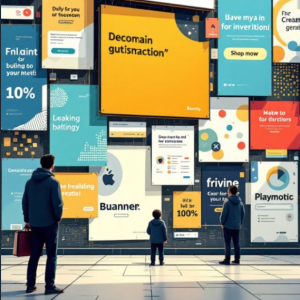
Underpinning this belief is the pursuit of the perfect customer. Platforms promise to help us reach the ideal person, all we need is first-party data in clean rooms, pumped through HubSpot and optimised. This micro-targeted golden goose will, supposedly, solve our sales problem. It won’t as audiences are atomised, creative has become assets, and ideas have been reduced to formats… none of which offer genuine engagement.
Much has been written about the damage caused by our obsession with short-term metrics. The attraction is obvious, digital channels can produce data that proves something is working. It feels scientific, objective and controllable. But attribution models are inherently flawed, they measure correlation, not causation. Pump that information into a dashboard and your agency, or more likely your in-house team, will claim every sale you make this month.
It always reminds me of the story of Uber, when they discovered that $100 million of digital advertising spend had generated no incremental growth. After switching off display campaigns, app downloads didn’t fall, they held steady. The reasons were many, but the real issue wasn’t fraud, it was the team’s incentive. The system rewarded everyone for proving that what they were doing was working, not for testing whether it should be done at all.
We have engineered an industry that mistakes data and precision for effective engagement, and rewards people for optimising bad ideas.
The science we keep ignoring, or the evidence against bad ideas
While we luxuriate in digital data, we seem to have forgotten that advertising effectiveness isn’t as mysterious as an algorithm. Decades of evidence, from the IPA Databank, from Binet and Field, from Byron Sharp, all point in the same direction. Business growth (and that’s the key word here, growth) comes from brand fame, from emotional storytelling, and from product distinctiveness. Not from micro-targeting, not from optimisation. Like compound interest, these effects take time to build and require consistency to mature.
Fame builds mental availability and emotion builds memory. Why we buy one brand over another is often down to the famous creative we remember, a gorilla playing the drums, a horse running through surf, or a robot eating mashed potato. Creativity drives disproportionate business returns, or more simply, it’s a profit multiplier.
I’ve been in this industry long enough to admit that I am predisposed to traditional media, it’s simply a truth. But I’m not foolish enough to ignore the power of TikTok or Facebook, or to deny their place on a modern plan. What frustrates me is that clients and planners alike are ignoring the science and underspending on powerful channels such as linear TV. Across 25 years of IPA data, linear TV remains the most proven profit driver. It delivers a long-term multiplier of 3.27 on every pound spent. It’s a human experience that offers extraordinary reach, a 100% safe environment, deep emotional connection, and unrivalled shared cultural moments.
And yet we know all this, so why do we keep ignoring it? We tell ourselves that nobody watches it, or that those who do are too old to bother advertising to, or that it’s simply too expensive. But the real reason is much simpler, it doesn’t show up in your weekly report or your last-click model. You can’t persuade the CFO because it won’t move next month’s metrics (even though it will). If it can’t be measured easily, it must not be working.
Linear TV’s enduring effectiveness reminds us of what the marketing science has been saying all along, creativity, delivered through brilliant media, builds fame and drives growth. No, it can’t be optimised by an algorithm or neatly displayed on a dashboard, but optimising bad ideas simply means choosing measurability over effectiveness.
Proof that good ideas outperform the bad ones – IPA Influencer Study 2025
Great creative ideas are not relics of the analogue age. The latest study from the IPA on the business effects of influencer campaign activity shows that it’s the idea, and the creative fit, that drive effectiveness, not the algorithm, and certainly not blind optimisation.
Based on 220 campaigns, 144 brands, 36 sectors, 28 markets and £133 million of spend, it is an extraordinary piece of research. The findings show that the long-term multiplier effect of influencer campaigns is 3.35 for every pound spent, a figure that even outweighs the effects that linear TV continues to deliver. Even channels born in the algorithmic age demonstrate that genuine audience engagement, fuelled by creativity, is still the ultimate differentiator. When influencer partnerships are authentic and creatively conceived, they deliver long-term business growth.
The challenge for many advertisers is the belief that there is a single lever to pull, a fire-and-forget sales missile that will solve the growth problem. The truth is that effectiveness has never been that simple. Growth has always come from a combination of media working in concert: the precision of digital with the reach and emotion of broadcast, the science of optimisation with the imagination of creativity. Influencer marketing has its place in that ecosystem, but the real lesson from the IPA data is this, even the newest platforms prove that creativity outperforms optimisation. The brands that win will be those that balance art and algorithm, originality and efficiency.
Soooo what do we do now then…
As with all first steps, we start by recognising that we have a problem. It’s easy to quote facts and case studies; much harder to confront the behaviours behind them. But if you’re wondering whether you’re caught in the same cycle, ask yourself a few questions:
- Am I trapped in the increasingly competitive bottom of the funnel, where my competitors and I are quietly throwing our margins away?
- Am I spending more and more inside platforms while my business growth has stalled?
- Am I congratulating myself on saving money by letting AI tools optimise my creative output for me?
- Am I laughing at the brands still “wasting” money on TV, while ignoring the inexorable rise in my own CPCs?
If any of those questions felt uncomfortably familiar, you’ve already taken the first step, recognising that something isn’t working as it should. The truth is that most of us can answer “yes” to at least one of them, and probably more. It’s easy to see the pattern in hindsight. The steady migration of budgets towards easily measured activity, the faith that more data would equal more growth. The quiet belief that a higher level of optimisation must, eventually, deliver a higher level of success.
The bottom of the funnel has become far more crowded and competitive, not more profitable. Margins are thinner, creative ambition is smaller, and the algorithms have long since stopped being our tools. Algorithms are the systems within which we now operate. The irony, of course, is that none of this was intentional, we optimised our way into a corner, confusing speed with progress and mistaking activity for change.
So what do we do about it?
The problem isn’t that optimisation exists, it’s that we’ve mistaken it for progress. Efficiency has become the purpose rather than the process, a language spoken fluently by agencies, procurement teams, and platforms alike. We’ve become so accustomed to proving that the system works that we’ve stopped asking whether the work itself does.
The answer isn’t to abandon optimisation but to put it back in its proper place, as the servant of creativity, not its substitute. Advertising has always been at its most effective when logic and imagination coexist; when evidence sharpens rather than dulls originality. That is what we mean when we say Outthink the Obvious, a deliberate attempt to restore the balance between efficiency and invention, between the science and the art of media.

Optimise the Obvious
The basics of media planning, clean data, disciplined phasing, accurate forecasting, transparent costings are not sources of differentiation, they are the preconditions of competence. Optimising the obvious means getting these fundamentals right so that creativity has a stable platform to operate from. It means removing the noise of administrative distraction and replacing it with clarity, so that ideas can breathe and perform.
But it is also an act of restraint. Because when we start to mistake operational precision for creative progress, we fall into the very trap we’ve been describing. A well-built machine is not a strategy, and a neat dashboard is not an idea. The basics are there to make better work possible, not to give us something tidy to look at while we avoid doing it.
Outthink the category
Once the mechanics are in order, the real task begins. Every category develops habits, the familiar combinations of media and message that form the safety net of consensus. The more those conventions harden, the less room there is for difference, and the more each competitor begins to look like the next. Outthinking the category means dismantling those defaults and rebuilding them in ways that restore surprise.
Sometimes that happens through media itself, a placement, a partnership, a use of data that changes the way people experience the message. Sometimes it comes from reframing what an audience actually is, seeing potential where others only see efficiency. The point is that creative media thinking isn’t a nice to have, it is the bridge between logic and imagination.
Always test and learn
Testing should be an act of exploration, not an exercise in validation. Yet across much of the industry, it has become precisely the opposite: a way of proving the continuity of the current system rather than challenging it. Evidence is collected to support decisions that have already been made, and metrics are chosen because they confirm what we hoped to find.
To test what’s next is to use data as a telescope rather than a microscope – to look forward, not backward. It requires curiosity and a tolerance for discomfort; genuine learning often begins with discovering that something doesn’t work as we thought. The brands that grow are not the ones that measure most, but the ones that are willing to let measurement change their behaviour.
We have to change what we’re focussing on
Every time we optimise a bad idea, something corrodes. It is slow and silent, visible only in hindsight, the moment when a brand realises that its share of voice has declined, its distinctiveness has dulled, and its marketing has become a series of competent but forgettable ads. The numbers still tell a reassuring story, but the story no longer matters to anyone outside the report.
This is what happens when an industry becomes addicted to evidence of effort rather than outcomes of imagination. We build presentations about progress while quietly accepting the absence of growth. Teams begin to protect the system rather than challenge it, because change looks too much like risk. Over time, the cost isn’t financial, it’s cultural. It’s the loss of creative energy that once made this business interesting.
We shouldn’t stop optimising stuff, it just can’t be all that we do
True optimisation starts with ideas that are worth the effort. It recognises that machines are extraordinary at pattern recognition but incapable of distinguishing between relevance and repetition. It treats media as a creative discipline and not a commodity. It uses performance data as feedback, and doesn’t just use it as way to justify spending more money.
Most of all, it accepts that short-term and long-term effects are not opposing forces but two halves of the same equation. Performance tells us what is happening now and fame determines whether anything will happen later. Optimisation that only serves the former is administration. Optimisation that serves both is progress.
Outthink the obvious
Optimisation has never been the enemy. The enemy is the comfort it provides, the sense of control that disguises creative decline. The future of this industry will not be defined by who has the best algorithm or the cheapest reach, it will be defined by who can balance efficiency with imagination, by who can keep the system running while still finding the courage to disrupt it.
That is the role of AC Media, to help clients rebuild that balance. To give them confidence that their investment is working efficiently, but also to ensure that it is directed toward something that people might actually remember. To protect the logic of performance without surrendering the magic of creativity.
Because in the end, the distinction is simple.
We can keep optimising bad ideas until there is nothing left to optimise, or we can outthink the obvious and start again.